
Many people think that home EV chargers are like a television or other household appliance. Bring it home, plug it in, and it works; however, EV chargers are not quite that simple.
In today’s article, we want to clear up some misconceptions about EV charger requirements without getting too technical.
What is Required to Install an EV Charger?
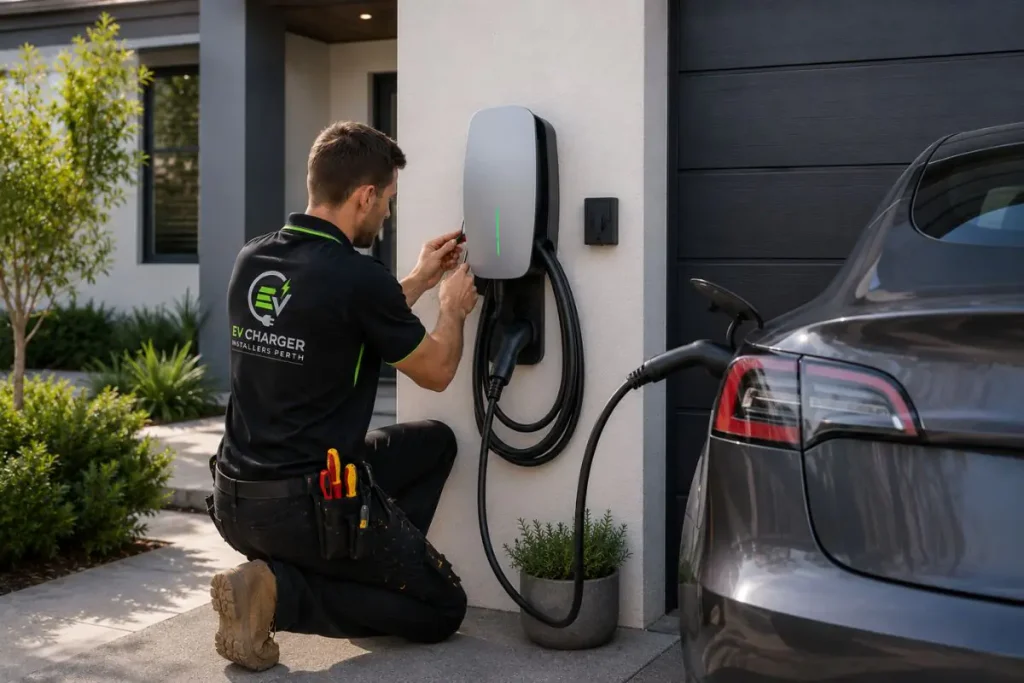
Home EV chargers aren’t “plug and play” devices. You must consider many important requirements before choosing or installing any charger.
Depending on your building, upgrades such as a new switchboard, additional circuit breakers, RCDs or RCBOs may need to be installed.
The building’s entire electrical supply system must be inspected and evaluated, including capacity, wiring, and circuit protection, before any charger can be installed.
In Brief: What are the Key Requirements for Installing an EV Charger in Australia?
In a nutshell, the following are the key requirements:
- A suitable electrical supply
- A switchboard that can support the EV charger
- A dedicated EV charger circuit for electrical safety
- RCD or RCBO as required
- Suitable cable and wiring
- A compatible EV charger
- A licensed EV charger installer
Other items may be required, including three-phase power and load management, but the list above covers most EV charger installations.
Choosing the Right Location for Your EV Charger
Choosing the right location for charging your EV is an important part of the installation process.
While you may have visualised where you believe the perfect location should be, your installer might have other ideas based on cable routing, electrical safety, and installation requirements.
Of course, most people want the cable to be close to where they normally park their EV. However, your installer will have to consider the distance from the switchboard, wall construction, weather exposure, and ease of access.
Choosing the perfect location will make charging more convenient and can lower installation costs by reducing the amount of cable and electrical work required.
Why EV Charger Installation Requirements Matter
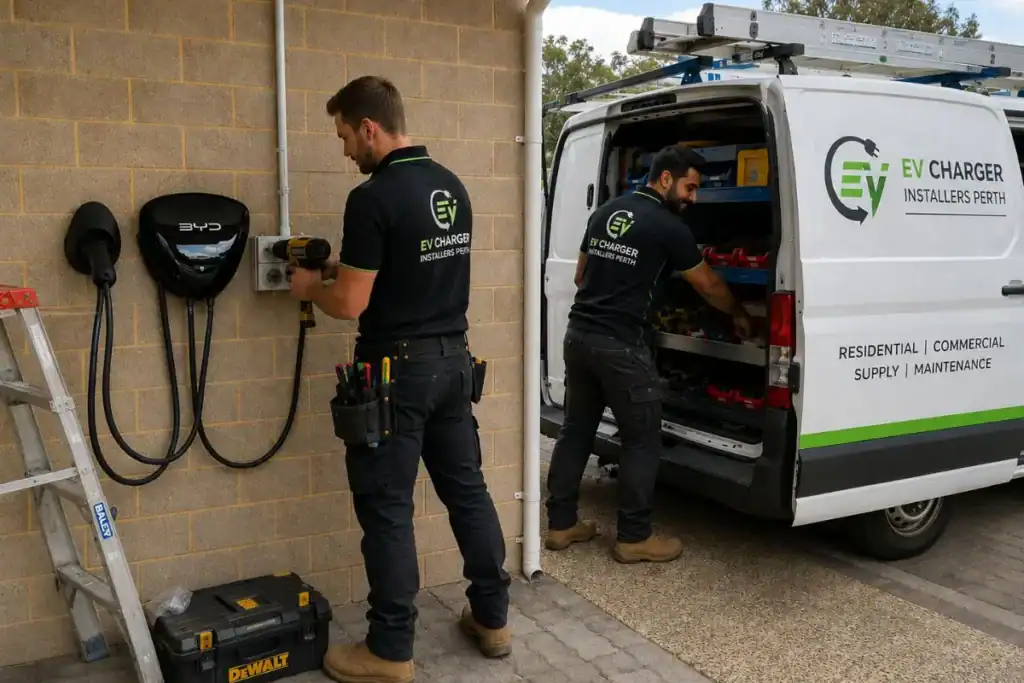
Unlike your cell phone, laptop, or tablet, it’s not as simple as plugging your EV into a power point and then plugging it into your car.
Charging your EV means there is a high electrical draw on your home’s electrical system that lasts for hours, far more power than your cell phone could ever demand.
This is why you need specific requirements to add an EV charger to your property.
Dedicated Circuits, RCD Protection, and Switchboard Capacity
Because your EV will draw a significant amount of power for an extended period, you need to ensure that your electrical system can handle the load.
Professional EV charger installers will inspect your switchboard capacity, the RCD protection your charger requires, and add a dedicated circuit to ensure that your EV charging station works properly, charges quickly, and remains safe at all times.
Single Phase, Three-Phase, and Power Supply Requirements
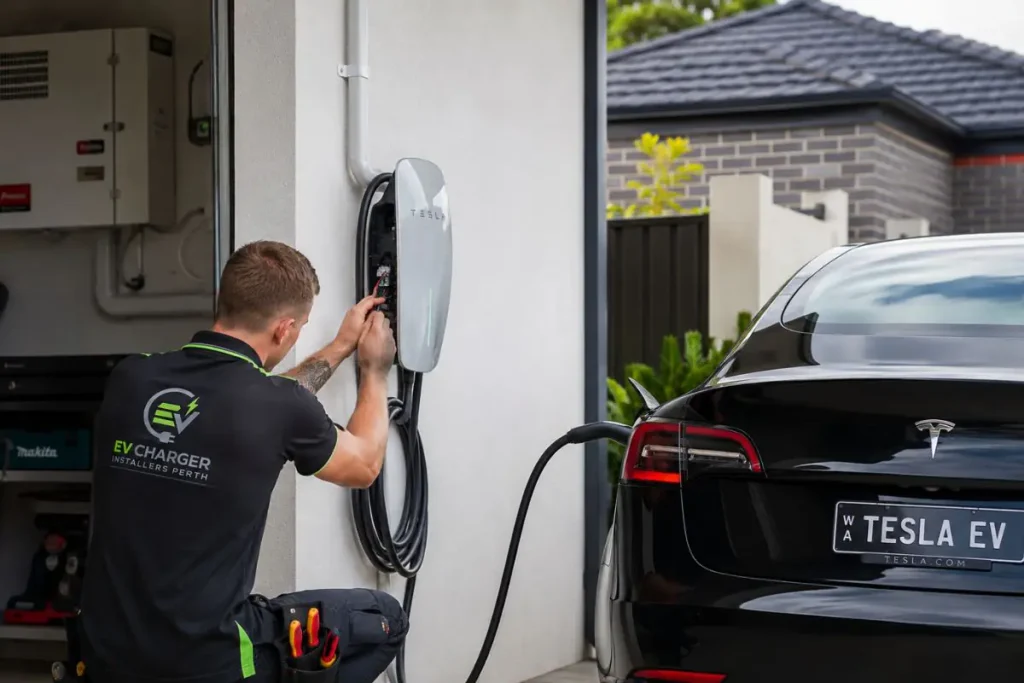
Most homes in Perth have a single-phase power supply, which is fine for almost everything, including EV charging.
On the other hand, commercial properties, industrial sites, and larger homes can have three-phase power, and this works with certain EV chargers.
Buying a three-phase charger for a single-phase property may not provide the faster charging speed you expect. Some chargers can operate on single-phase power, while others require a three-phase supply.
This is why a licensed professional EV charger installer must do a full assessment of your electric grid before choosing and installing EV chargers. Your installer can recommend the best option based on your vehicle and property’s electrical system.
Charger types vary, as do electrical systems. Always hire a licensed EV charger installer to ensure you get the right charger and that you have the necessary electrical infrastructure to support your new EV.
Can a Regular Electrician Install an EV Charger in Perth?
Australian standards require a licensed electrician to install an EV charger in Perth.
However, you would be wise to choose someone who has a great deal of experience installing EV chargers and understands the difference between charging models.
EV charging systems have specific requirements that go beyond a standard electrical installation, including charger compatibility, load considerations, and circuit protection.
Electric vehicle supply equipment goes beyond just installing a power point. It includes assessing the switchboard and the home’s current electrical demand, circuit protection, the correct type of RCD (which varies depending on the charger you want to use), and charger compatibility.
Choosing an installer who specialises in EV charger installation can give you the added confidence that your installation will follow all safety protocols and have the proper EV charging connections you need for many years of fast, safe EV charging.
Choosing the Right Charger for Your Vehicle and Property
Choosing the best EV charger for your car and property is more than just picking a name you like.
The ideal charger will depend on your property’s electrical supply, your EV, where the charger will be installed, and how you plan on using it.
Many chargers have features you will want to consider, such as smart charging, load management, and solar compatibility.
The best charger for your home or office is the one that works best with your property, not just your EV.
Common EV Charger Installation Mistakes to Avoid
Some of the most common mistakes include:
- Selecting a charger that isn’t suitable for the vehicle or the property
- Assuming your current switchboard can handle the extra load
- Failure to install a dedicated EV charger circuit breaker
- Using incorrect or inadequate RCD protection
- Poor charger installation location
- Overlooking future charging needs such as adding a second vehicle or integrating solar power
- Using an unqualified person who doesn’t understand the charging infrastructure
You can avoid these problems by hiring professional electrical contractors. Their experienced, licensed, and insured technicians will perform site assessments and handle the issues.
Plan a Safe and Compliant EV Charger Installation in Perth
Every property is different, which is why a professional assessment and proper electrical installation done by a professional is the best way to keep your EV charger safe and compliant.
Avoid unnecessary delays, unexpected costs, and future electrical issues when you use a highly experienced, licensed EV charger installer.
When to Call a Professional EV Charger Installer
The best time to call your professional EV charger installer is before you purchase a charging unit.
A pre-installation assessment can help you avoid the most common problems EV owners run into when installing EV chargers.
A professional installer, such as the ones at EV Charger Installers Perth, will do a full assessment of your electric supply, offer expert advice on any upgrades that might be required, and recommend the best EV charger for your unique situation.
Before you purchase a charger, call the experts at EV Charger Installers Perth. We are locally owned and operated, and we can help you get the most out of your EV charging experience.
Frequently Asked Questions
Q: Do I need a dedicated circuit for an EV charger?
A: Yes! EV chargers need a dedicated circuit designed specifically for EV charging. Because EV chargers draw a significant amount of power, the circuit supplying the power should not be overloaded by other household appliances or other uses. Your professional EV charger installer will determine the correct circuit for your unique situation.
Q: Does an EV charger need RCD protection?
A: Yes, it does. Even if your charger says it has built-in 6mA DC protection, you will still need to add some type of RCD protector to ensure a safe EV charger installation.
Q: Can my existing switchboard support an EV charger?
A: The answer to this depends on the age, condition, and capacity of your existing switchboard. Many newer homes in Perth can use their existing switchboard, but older homes may need an upgrade.
A professional assessment is vital to ensure that your switchboard has sufficient capacity and room for additional components.
Q: When does an EV charger need a switchboard upgrade?
A: You may need to upgrade your switchboard if your current switchboard doesn’t have the capacity to support an EV charger or if it doesn’t meet current Australian standards.
Before installation, your professional EV charger installer will do a complete assessment and will offer you general advice as to whether an upgrade is needed.