
Today we want to address why RCD protection is important when installing an EV charger. We all love the convenience of fast charging, but we must not forget that these electrical circuits need protection to meet Australian standards.
There’s a lot of confusion about what an RCD is and what it does, and whether you need one. We hope the information we provide in this post will clear up misconceptions.
What Type of RCD is Required for EV Chargers in Perth?
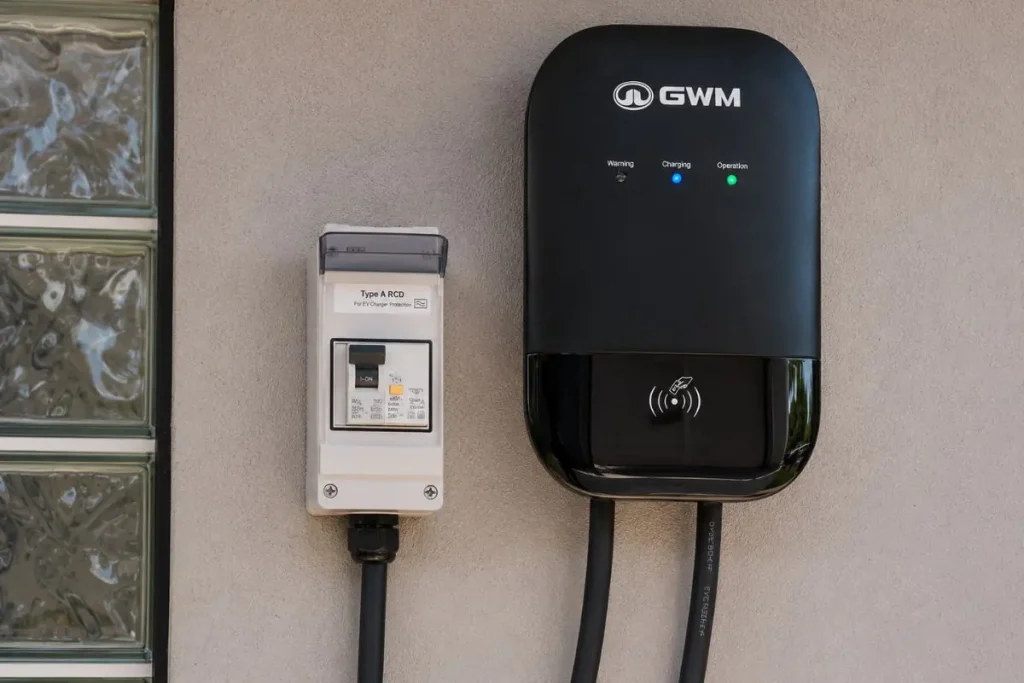
The RCD (residual current device) required by Australian standards depends on the type of charger used and how it is designed.
EV chargers with built-in DC protection are easily installed with Type A RCD, while other chargers without these protective devices usually need a Type B protector to comply with WA standards.
To protect you from electrical shocks and ensure that your EV charger meets Australian standards, you must use the correct type of RCD protection, and hiring a licensed EV charger installer should be your first step.
Why RCD Protection Matters when Installing an EV Charger
RCDs are important safety devices that interrupt the electrical current if the sensor (the RCD) detects a fault.
Because your EV charger pulls a lot of electricity for extended periods, having the correct type of RCD protection for your charger isn’t just a good idea – it’s essential!
RCDs are designed to prevent electrical shock, minimise fire risks, and ensure that your EV charging system is working properly.
To comply with Australian standards, it is vital to install the correct RCD for your application.
Understanding Type A, Type B, and 6mA DC Protection
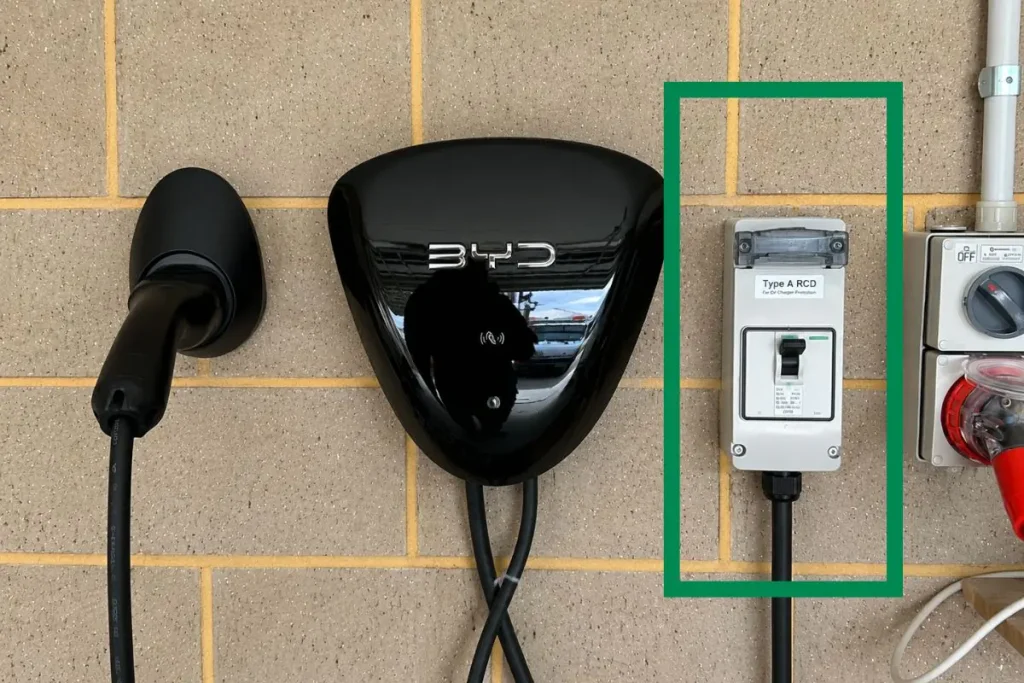
This is where things get confusing.
Many EV chargers include a 6mA DC protector. If your charger has this protection, a Type A RCD will be all that is required.
However, if your EV charger does NOT have this internal protector, you will need a Type B RCD protective device.
The internal 6mA DC protector will cut power if it detects DC leakage, ensuring that a Type A RCD continues to operate correctly.
So if your EV charger doesn’t have this primary built-in protector, you will need a Type B RCD unit, which monitors pulsating DC faults, smooth DC residual currents, and AC faults.
Fortunately, you don’t need to understand what smooth and pulsating DC faults mean. As a consumer, you only need to know that if your EV charger does not have the built-in 6mA charger, you will need the more expensive Type B RCD unit.
Why a Type AC RCD is Not Suitable for EV Charging Equipment
As the name implies, a Type AC RCD unit is designed to detect AC (alternating current) faults only.
This RCD type is insufficient for EV charging because EV charging units contain advanced electronic components that may produce DC leakage. This means that a Type AC RCD won’t recognise DC faults.
This clearly highlights the importance of using the correct type of RCD for your EV charging installation and setup. It is also the reason why Australian standards call for more appropriate electrical equipment protection.
What Type of RCD is Required for EV Chargers in Perth?
The main objective is to understand that the type of RCD requirements used for your electric vehicle will depend on the charger itself.
If the charger has built-in protection, then installing a Type A RCD unit will be sufficient.
If the charger does not have any protection, then you will need a Type B RCD unit.
Common EV Charger RCD Installation Mistakes
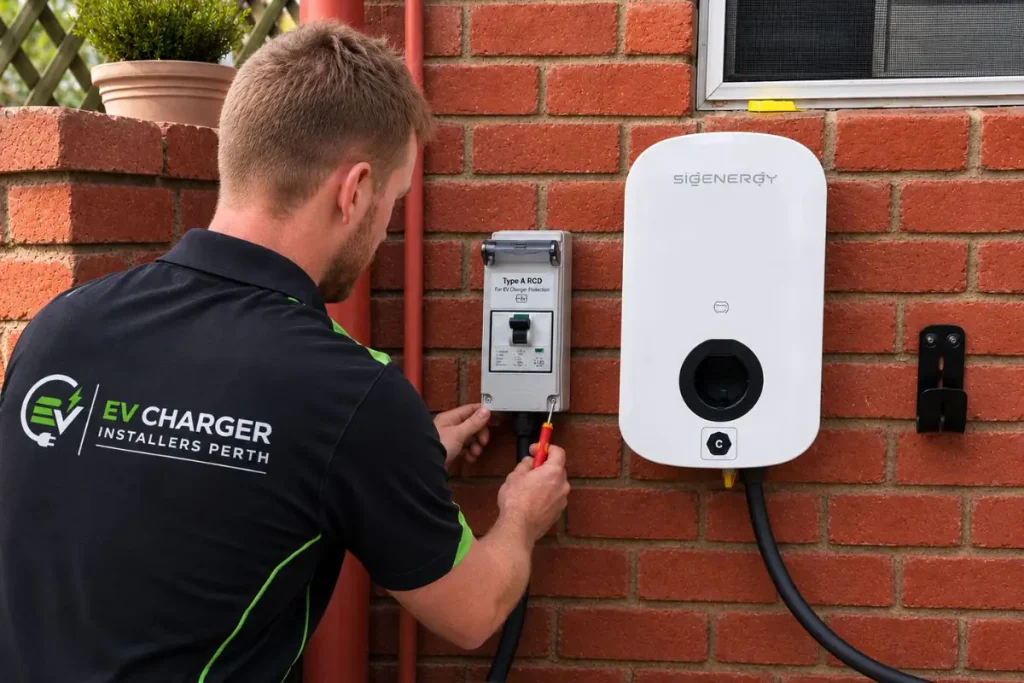
Perhaps the most common electrical installation mistake with EV chargers is assuming that the current RCD is sufficient for the consumer unit. In other words, too many people assume that their EV charging circuits are protected by the household RCD.
Other issues include installing the wrong type of RCD, connecting the charger to an already overloaded circuit, failing to follow wiring rules, and non-compliance with Australian standards.
These issues can be avoided when you hire a licensed, professional EV charger installer.
Plan a Safe and Compliant EV Charger Installation in Perth
Installing an EV charger involves a well-planned and thoroughly carried-out process.
The switchboard and meter box need a full assessment, the type of EV charger selected needs to be evaluated, and all electrical circuits need to be considered before installation.
Australian law requires that you use a licensed and insured EV charger installer to comply with current standards.
Do EV Chargers Have Built-in RCD?
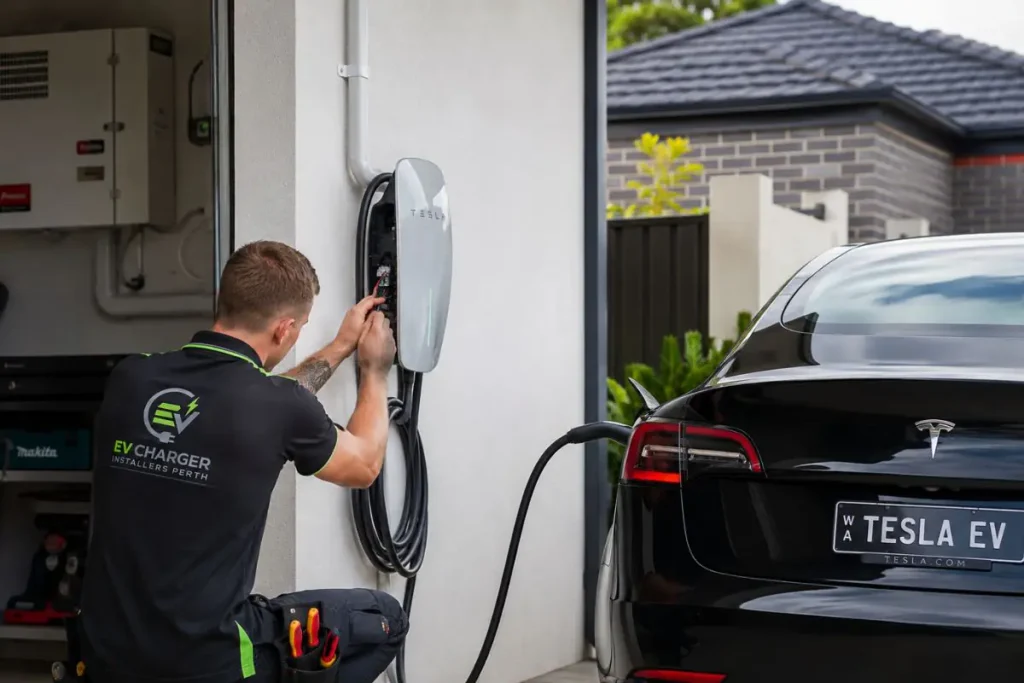
As we mentioned earlier, some EV chargers do have built-in protection, but these are not sufficient to meet current standards.
Even when EV chargers have built-in 6mA RCDs, you will still need a separate Type A RCD added to your electrical system.
Can an EV Charger Share an RCD with Another Circuit?
This is one of those “you can, but you shouldn’t” type of questions.
We don’t advise installing an EV charger that shares an RCD with another circuit.
A dedicated circuit ensures that your charger operates safely, while greatly reducing the risk of circuit overload, overheating, and possible fires.
A professional EV charger installer will assess the entire electrical system and ensure that your EV charger installation is safe and working properly.
How Will I Know if My Existing Switchboard Can Safely Support EV Charging?
The best way to find out if your current switchboard can handle an EV charging station is to have it professionally inspected by a licensed EV charger installer.
A professional will do a full inspection and assessment of your electrical system, including the meter box and switchboard, before the installation.
Many newer switchboards can safely add an EV charging point. However, older homes or older switchboards may need an upgrade for electric vehicle charging.
When to Call a Licensed EV Charger Installer
The best time to make your appointment with a licensed EV charger installer is before you purchase your home EV charging system.
The licensed and insured professionals at EV Charger Installers Perth will assess your current electrical system to recommend the best type of charger for your electric vehicle.
If your system requires an additional RCD or a switchboard upgrade, the experts at EV Charger Installers Perth will advise you before any work is done.
Choosing experienced and professional installers will ensure that you get the fast charging you want without tripping circuit breakers or risking electric shock.
Frequently Asked Questions
Q: Can an EV charger cause an RCD to trip?
A: Yes, it can, but not simply because it’s an EV charger. If the RCD detects a fault or an unsafe level of current leakage, it can shut off electricity to your charger as a matter of safety. Tripping can also happen if the wrong type of RCD is installed, there is a problem with the electrical circuit, or the charging equipment itself is malfunctioning.
Frequent or unexplained tripping should never be ignored. Call the professionals at EV Charger Installers Perth for a full evaluation of your EV charging system.
Q: Can I use the RCD already installed in my switchboard?
A: This depends on the type of RCD installed, whether the circuit has reached its limit, and whether it’s the right RCD for your type of EV charger. Your existing RCD may provide the required level of protection, or it may not.
This is why it is vital to hire a professional installer, such as the experts you’ll find at EV Charger Installers Perth.
Q: What is the difference between an RCD and an RCBO?
A: In a nutshell, an RCD (residual current device) protects people from electric shock due to an electrical fault. When the RCD finds a fault, it immediately cuts the power. An RCBO (residual current breaker with overcurrent protection) combines an RCD with a circuit breaker, protecting you from electric leakage, overcurrent, and electrical shorts. This gives you additional protection.
It is becoming more common for EV charger installations to use RCBOs for a more comprehensive protection. Ask the professional installers at EV Charger Installers Perth if an RCBO is right for your unique situation.
Q: Does an EV charger need to be RCD protected?
A: Yes, it does. The last thing anyone wants is to overheat the circuit breakers, possibly causing a fire or electric shock. This is why Australia has strict standards for EV chargers and requires professional installers to take the guesswork out of EV charger installations.